Buy bookmarkit.info ?
We are moving the project
bookmarkit.info .
Are you interested in purchasing the domain
bookmarkit.info ?
domain@kv-gmbh.de · 0541-91531010
Buy bookmarkit.info ?
Does the ozone layer filter infrared radiation?
No, the ozone layer does not filter infrared radiation. The ozone layer primarily absorbs and filters out harmful ultraviolet (UV) radiation from the sun, which helps protect the Earth and its inhabitants from the damaging effects of UV rays. Infrared radiation, on the other hand, is not significantly affected by the ozone layer and is able to penetrate through the atmosphere and reach the Earth's surface. **
Does the Canon EOS 600D have an infrared blocking filter?
Yes, the Canon EOS 600D does have an infrared blocking filter. This filter is designed to block infrared light from reaching the camera's sensor, which helps to produce more accurate and natural colors in the final image. The presence of this filter is common in digital cameras to prevent infrared light from affecting the color balance of the images. **
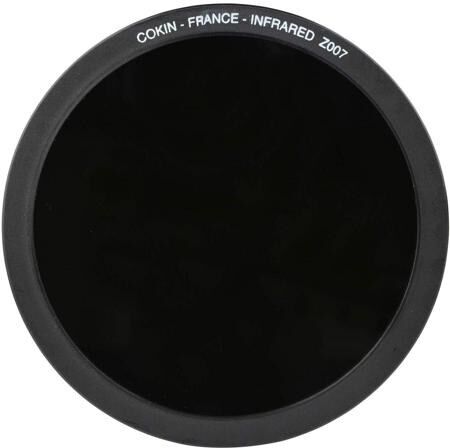

Similar search terms for Cokin-Infrared-89B-Filter
Top-Angebote
Products related to Cokin-Infrared-89B-Filter:
-
Cokin Z PRO 100mm Filter HolderFeatures:The Cokin Z-PRO Filter Holder is specifically adapted for filters 100 x 150mm (4 x 6 ) and designed for medium format cameras as well as wide-angle focal lengths below 20mm (in the 35mm format). The Z-Series is also well adaptable for Broadcast media.Please Note:The adapter rings are sold separately - available from 49-96mm92,99 £*Shipping: 0,00 £Secure redirect to the provider
-
Cokin Z-Pro Series Z154 ND8 Filter@@ Without altering colors, Cokin neutral density filters will allow you to gain the 1, 2 or 3 apertures you need to vary the background, distance and depth of field. @@ Neutral density filters allow you to use the low speeds needed to give an impression of speed. @@ Cokin's Neutral density filters are available in three grades and can be used in combination with almost any other type of filter.76,49 £*Shipping: 0,00 £Secure redirect to the provider
-
Cokin NX Series 100x143.5mm Filter Frame #FR143NXSFits 100mm x 143.5mm x 2mm thick square filters Use with NX Series filter holder Includes two spare screws and screwdriver Compatible Filters are Nuances Extreme ND8, ND64, ND1024, Nuances Clearsky, Nuances Infrared 72028,99 £*Shipping: 0,00 £Secure redirect to the provider
-
Cokin NX Series Starter Filter Kit #KIT11NXSNX Filter Folder Features Use with ultra-wide-angle lenses up to 16mm without vignetting Compatible with Z-pro adapter rings and select filters Use up to 3 filters: (2) 100mm wide filters + Polarizer Lightweight and intuitive design Integrated gasket prevents light leaks Dedicated polarizer rotation wheel NX Circular Polarizer Filter Features Compatible with NX Filter Holder only Absorbs 1 f-stop of light Schott B270 glass Anti-reflective multi coatings Scratch and oil resistant hardened topcoat217,49 £*Shipping: 0,00 £Secure redirect to the provider


-
How did Henri Becquerel discover infrared radiation in sunlight?
Henri Becquerel discovered infrared radiation in sunlight by conducting an experiment in 1896. He placed different colored glass filters over a thermometer and exposed it to sunlight. He noticed that the temperature of the thermometer increased even when the sunlight passed through a red filter, which blocked visible light. This led him to conclude that there must be invisible radiation beyond the visible spectrum that was responsible for the heating effect, which we now know as infrared radiation. **
-
How did Henri Becquerel discover the infrared radiation in sunlight?
Henri Becquerel did not discover infrared radiation in sunlight; he is actually known for his discovery of radioactivity. In 1800, Sir William Herschel discovered infrared radiation by using a prism to split sunlight into its different colors and measuring the temperature increase beyond the red end of the spectrum. This led to the discovery of infrared radiation, which is invisible to the human eye but can be felt as heat. **
-
How can one build an infrared filter for the light of a cellphone camera themselves?
To build an infrared filter for a cellphone camera, one can start by obtaining a piece of developed film negative, as it contains the necessary material to block visible light and allow infrared light to pass through. Next, cut the film negative to fit the size of the camera lens and attach it securely using tape or adhesive. This filter will block visible light and only allow infrared light to reach the camera sensor, resulting in infrared photography. It's important to note that this DIY filter may not be as effective as professional filters, but it can still produce interesting infrared images. **
-
How can one build an infrared filter for the light of a mobile phone camera themselves?
To build an infrared filter for a mobile phone camera, one can use a developed film negative or a piece of exposed film. The film negative can be cut to fit the size of the camera lens and then taped or glued over the lens. This filter will block visible light and allow only infrared light to pass through, creating infrared images. It's important to note that this DIY method may not be as effective as a professional infrared filter, but it can still produce interesting results. **

How can one save or filter the text of a website?
One way to save or filter the text of a website is by using a web scraping tool or software that allows you to extract specific information from a webpage. Another method is to manually copy and paste the text into a document or text editor. Additionally, some browsers have built-in features or extensions that enable you to save or filter the text of a website for later reference. **
Could there really be some kind of filter in the universe that makes it impossible to discover extraterrestrial life?
It is possible that there could be some kind of filter in the universe that makes it difficult for us to discover extraterrestrial life. This could be due to a variety of factors such as the rarity of habitable planets, the difficulty of interstellar travel, or the possibility that advanced civilizations self-destruct before they are able to make contact with us. However, it is also important to consider that our current technology and methods for detecting extraterrestrial life may simply not be advanced enough to detect life beyond our own planet. As our understanding of the universe continues to grow, we may eventually overcome any potential filters and make contact with extraterrestrial life. **
Top-Angebote
Products related to Cokin-Infrared-89B-Filter:
-
Cokin P007 INFRARED (89B)For Film or Digital cameras. For Film cameras, to be used with Infrared Color and Black & White films. This filter is equivalent to the Kodak 89B written filter with a spectrum transmission of 50% at 720 nm. The distinctive feature of Infrared filters is that they "filter" most of the visible rays and let infrared rays go so as to produce spectacular photographic effects. The process in Digital is really easy: once the picture is shot, you must "un-saturate" your image on your computer, in other words tran...60,49 £*Shipping: 0,00 £Secure redirect to the provider
-
Cokin Z PRO 100mm Filter HolderFeatures:The Cokin Z-PRO Filter Holder is specifically adapted for filters 100 x 150mm (4 x 6 ) and designed for medium format cameras as well as wide-angle focal lengths below 20mm (in the 35mm format). The Z-Series is also well adaptable for Broadcast media.Please Note:The adapter rings are sold separately - available from 49-96mm92,99 £*Shipping: 0,00 £Secure redirect to the provider
-
Cokin Z-Pro Series Z154 ND8 Filter@@ Without altering colors, Cokin neutral density filters will allow you to gain the 1, 2 or 3 apertures you need to vary the background, distance and depth of field. @@ Neutral density filters allow you to use the low speeds needed to give an impression of speed. @@ Cokin's Neutral density filters are available in three grades and can be used in combination with almost any other type of filter.76,49 £*Shipping: 0,00 £Secure redirect to the provider
-
Does the ozone layer filter infrared radiation?
No, the ozone layer does not filter infrared radiation. The ozone layer primarily absorbs and filters out harmful ultraviolet (UV) radiation from the sun, which helps protect the Earth and its inhabitants from the damaging effects of UV rays. Infrared radiation, on the other hand, is not significantly affected by the ozone layer and is able to penetrate through the atmosphere and reach the Earth's surface. **
-
Does the Canon EOS 600D have an infrared blocking filter?
Yes, the Canon EOS 600D does have an infrared blocking filter. This filter is designed to block infrared light from reaching the camera's sensor, which helps to produce more accurate and natural colors in the final image. The presence of this filter is common in digital cameras to prevent infrared light from affecting the color balance of the images. **
-
How did Henri Becquerel discover infrared radiation in sunlight?
Henri Becquerel discovered infrared radiation in sunlight by conducting an experiment in 1896. He placed different colored glass filters over a thermometer and exposed it to sunlight. He noticed that the temperature of the thermometer increased even when the sunlight passed through a red filter, which blocked visible light. This led him to conclude that there must be invisible radiation beyond the visible spectrum that was responsible for the heating effect, which we now know as infrared radiation. **
-
How did Henri Becquerel discover the infrared radiation in sunlight?
Henri Becquerel did not discover infrared radiation in sunlight; he is actually known for his discovery of radioactivity. In 1800, Sir William Herschel discovered infrared radiation by using a prism to split sunlight into its different colors and measuring the temperature increase beyond the red end of the spectrum. This led to the discovery of infrared radiation, which is invisible to the human eye but can be felt as heat. **
Similar search terms for Cokin-Infrared-89B-Filter
-
Cokin NX Series 100x143.5mm Filter Frame #FR143NXSFits 100mm x 143.5mm x 2mm thick square filters Use with NX Series filter holder Includes two spare screws and screwdriver Compatible Filters are Nuances Extreme ND8, ND64, ND1024, Nuances Clearsky, Nuances Infrared 72028,99 £*Shipping: 0,00 £Secure redirect to the provider
-
Cokin NX Series Starter Filter Kit #KIT11NXSNX Filter Folder Features Use with ultra-wide-angle lenses up to 16mm without vignetting Compatible with Z-pro adapter rings and select filters Use up to 3 filters: (2) 100mm wide filters + Polarizer Lightweight and intuitive design Integrated gasket prevents light leaks Dedicated polarizer rotation wheel NX Circular Polarizer Filter Features Compatible with NX Filter Holder only Absorbs 1 f-stop of light Schott B270 glass Anti-reflective multi coatings Scratch and oil resistant hardened topcoat217,49 £*Shipping: 0,00 £Secure redirect to the provider
-
Cokin P-Series P121M Graduated Neutral Density Filter Grey G2 - Medium ND4 FilterGrey Neutral Density filters compensate for bright light. By under-exposing the sky they give a better relief to the surfaces and colors of landscapes and architecure. They are indispensable in summer for seaside and mountain photos. They are available in six choices to cover every situation. 120 - 2X graduated neutral density filter reduces the light 1 stop 121 - 8X graduated neutral density filter reduces the light 3 stops. 121L - 2X Light starts with the same neutral density as 120 but feathers the grey almost from the color edge and more gently graduates to clear. One stop of compensation. 121M - 4X Medium is the same gentle graduation as 121L but with twice in dens ty. Requires 2 stops of compensation. 121S - 8X Soft is twice the density of 121M and the graduation extends to 3/4 of the filter. Requires 3 stops. 121F - 8X Full is the same as 121S except that the neutral density grey cover the entire filter. Requires 3 stops44,49 £*Shipping: 0,00 £Secure redirect to the provider
-
How can one build an infrared filter for the light of a cellphone camera themselves?
To build an infrared filter for a cellphone camera, one can start by obtaining a piece of developed film negative, as it contains the necessary material to block visible light and allow infrared light to pass through. Next, cut the film negative to fit the size of the camera lens and attach it securely using tape or adhesive. This filter will block visible light and only allow infrared light to reach the camera sensor, resulting in infrared photography. It's important to note that this DIY filter may not be as effective as professional filters, but it can still produce interesting infrared images. **
-
How can one build an infrared filter for the light of a mobile phone camera themselves?
To build an infrared filter for a mobile phone camera, one can use a developed film negative or a piece of exposed film. The film negative can be cut to fit the size of the camera lens and then taped or glued over the lens. This filter will block visible light and allow only infrared light to pass through, creating infrared images. It's important to note that this DIY method may not be as effective as a professional infrared filter, but it can still produce interesting results. **
-
How can one save or filter the text of a website?
One way to save or filter the text of a website is by using a web scraping tool or software that allows you to extract specific information from a webpage. Another method is to manually copy and paste the text into a document or text editor. Additionally, some browsers have built-in features or extensions that enable you to save or filter the text of a website for later reference. **
-
Could there really be some kind of filter in the universe that makes it impossible to discover extraterrestrial life?
It is possible that there could be some kind of filter in the universe that makes it difficult for us to discover extraterrestrial life. This could be due to a variety of factors such as the rarity of habitable planets, the difficulty of interstellar travel, or the possibility that advanced civilizations self-destruct before they are able to make contact with us. However, it is also important to consider that our current technology and methods for detecting extraterrestrial life may simply not be advanced enough to detect life beyond our own planet. As our understanding of the universe continues to grow, we may eventually overcome any potential filters and make contact with extraterrestrial life. **
* All prices are inclusive of VAT and, if applicable, plus shipping costs. The offer information is based on the details provided by the respective shop and is updated through automated processes. Real-time updates do not occur, so deviations can occur in individual cases. ** Note: Parts of this content were created by AI.