Buy bookmarkit.info ?
We are moving the project
bookmarkit.info .
Are you interested in purchasing the domain
bookmarkit.info ?
domain@kv-gmbh.de · 0541-91531010
Buy bookmarkit.info ?
How can one distinguish ionic compounds from molecular compounds?
Ionic compounds are formed from the attraction between positively and negatively charged ions, while molecular compounds are formed from the sharing of electrons between atoms. One way to distinguish between the two is to look at their chemical formulas. Ionic compounds typically consist of a metal and a nonmetal, while molecular compounds consist of nonmetals only. Additionally, ionic compounds tend to have higher melting and boiling points compared to molecular compounds due to their strong electrostatic attractions. Finally, conducting a simple solubility test can also help distinguish between the two types of compounds, as ionic compounds are often soluble in water while molecular compounds may not be. **
How do you distinguish determinative compounds and possessive compounds?
Determinative compounds are formed by combining two words to create a new concept, where the first word determines the meaning of the second word. For example, "blackboard" is a determinative compound where "black" determines the type of "board." Possessive compounds, on the other hand, indicate possession or relationship between the two words. For example, "John's car" is a possessive compound where "John" possesses the "car." In summary, determinative compounds determine the meaning of the second word, while possessive compounds indicate possession or relationship between the two words. **


Similar search terms for Compounds
Top-Angebote
Products related to Compounds:
-
"Care Bears: Storables 8"" Box - Share Bear - Ages 1+""CARE BEARS: STORABLES 8"" - SHARE BEAR - Care Bears Storables! Join the craze and become amazed! Adorable Storables transform from a box to a cubby. Adorable Storables large lid allows you to have even more stuff in your storable."33,87 $*Shipping: 0,00 $Secure redirect to the provider
-
"Care Bears: Storables 10"" Box - Share Bear - Ages 1+""CARE BEARS: STORABLES 10"" - SHARE BEAR - Care Bears Storables! Join the craze and become amazed! Adorable Storables transform from a box to a cubby. Adorable Storables large lid allows you to have even more stuff in your storable."62,49 $*Shipping: 0,00 $Secure redirect to the provider
-
"Care Bears: Storables 12"" Box - Share Bear - Ages 1+""CARE BEARS: STORABLES 12"" - SHARE BEAR - Care Bears Storables! Join the craze and become amazed! Adorable Storables transform from a box to a cubby. Adorable Storables large lid allows you to have even more stuff in your storable."59,44 $*Shipping: 0,00 $Secure redirect to the provider
-
Tula Free to Grow Baby Carrier - Discover?Discover is inspired by the early awestruck moments your little one has when they learn new and exciting things. Gray clusters of stars cascade across a jet black background covering the entire carrier.As you welcome your baby to the world, the...159,00 $*Shipping: 0,00 $Secure redirect to the provider




-
Can you help me with chemistry? I need information about atomic compounds, metal compounds, and ionic compounds.
Of course! Atomic compounds are formed when two or more non-metal atoms are chemically bonded together, such as in molecules like water (H2O) and carbon dioxide (CO2). Metal compounds are formed when a metal atom is bonded to one or more non-metal atoms, such as in compounds like sodium chloride (NaCl) and iron oxide (Fe2O3). Ionic compounds are formed when a metal atom transfers one or more electrons to a non-metal atom, resulting in the formation of positively and negatively charged ions that are attracted to each other, such as in compounds like sodium chloride (NaCl) and calcium carbonate (CaCO3). Let me know if you need more specific information or examples! **
-
Why do molecular compounds have lower boiling points than ionic compounds?
Molecular compounds have lower boiling points than ionic compounds because the intermolecular forces holding the molecules together are generally weaker than the electrostatic forces holding ions together in ionic compounds. In molecular compounds, the intermolecular forces are typically van der Waals forces, dipole-dipole interactions, or hydrogen bonding, which are weaker than the strong ionic bonds in ionic compounds. As a result, less energy is required to overcome these weaker intermolecular forces, leading to lower boiling points for molecular compounds compared to ionic compounds. **
-
Name the isomeric compounds.
Isomers are compounds that have the same molecular formula but different structural arrangements. Some examples of isomeric compounds include butane and isobutane, which both have the molecular formula C4H10 but differ in their structural arrangement. Another example is glucose and fructose, which both have the molecular formula C6H12O6 but have different structural arrangements and properties. **
-
What are sodium compounds?
Sodium compounds are chemical compounds that contain sodium as one of their elements. These compounds can be found in various forms, such as sodium chloride (table salt), sodium hydroxide (lye), and sodium bicarbonate (baking soda). Sodium compounds are widely used in industry, agriculture, and everyday life due to their diverse properties and applications. **

What are atomic compounds?
Atomic compounds are chemical compounds that are composed of individual atoms of different elements bonded together. These compounds are held together by chemical bonds, such as ionic or covalent bonds, and do not contain any molecules. Examples of atomic compounds include sodium chloride (NaCl) and water (H2O). Unlike molecular compounds, which are made up of molecules, atomic compounds are made up of individual atoms. **
What are molecular compounds?
Molecular compounds are chemical compounds formed by the combination of two or more non-metal atoms. These atoms are held together by covalent bonds, which involve the sharing of electrons. Molecular compounds can exist as discrete molecules, such as water (H2O) and carbon dioxide (CO2), and they typically have lower melting and boiling points compared to ionic compounds. Examples of molecular compounds include methane (CH4), ammonia (NH3), and sulfur dioxide (SO2). **
Top-Angebote
Products related to Compounds:
-
Scholastic Share Black Stories: Picture Book ProfilesThese three stories are tales of hope, courage, and inspiration.This set includes:Bessie the Motorcycle QueenI Am Ruby BridgesJust Like Jesse Owens Share Black Stories: Picture Book Profiles47,57 $*Shipping: 0,00 $Secure redirect to the provider
-
Pfaltzgraff Winterberry Red Ribbon Share Plate, 12 InchAs fall turns to winter, bright holly berries make their appearance. Winterberry by Pfaltzgraff is the holiday classic that brings this timeless motif to life in elegantly sculpted dinnerware and serveware, beautiful glassware, and joyous giftware.29,49 $*Shipping: 0,00 $Secure redirect to the provider
-
"Care Bears: Storables 8"" Box - Share Bear - Ages 1+""CARE BEARS: STORABLES 8"" - SHARE BEAR - Care Bears Storables! Join the craze and become amazed! Adorable Storables transform from a box to a cubby. Adorable Storables large lid allows you to have even more stuff in your storable."33,87 $*Shipping: 0,00 $Secure redirect to the provider
-
"Care Bears: Storables 10"" Box - Share Bear - Ages 1+""CARE BEARS: STORABLES 10"" - SHARE BEAR - Care Bears Storables! Join the craze and become amazed! Adorable Storables transform from a box to a cubby. Adorable Storables large lid allows you to have even more stuff in your storable."62,49 $*Shipping: 0,00 $Secure redirect to the provider
-
How can one distinguish ionic compounds from molecular compounds?
Ionic compounds are formed from the attraction between positively and negatively charged ions, while molecular compounds are formed from the sharing of electrons between atoms. One way to distinguish between the two is to look at their chemical formulas. Ionic compounds typically consist of a metal and a nonmetal, while molecular compounds consist of nonmetals only. Additionally, ionic compounds tend to have higher melting and boiling points compared to molecular compounds due to their strong electrostatic attractions. Finally, conducting a simple solubility test can also help distinguish between the two types of compounds, as ionic compounds are often soluble in water while molecular compounds may not be. **
-
How do you distinguish determinative compounds and possessive compounds?
Determinative compounds are formed by combining two words to create a new concept, where the first word determines the meaning of the second word. For example, "blackboard" is a determinative compound where "black" determines the type of "board." Possessive compounds, on the other hand, indicate possession or relationship between the two words. For example, "John's car" is a possessive compound where "John" possesses the "car." In summary, determinative compounds determine the meaning of the second word, while possessive compounds indicate possession or relationship between the two words. **
-
Can you help me with chemistry? I need information about atomic compounds, metal compounds, and ionic compounds.
Of course! Atomic compounds are formed when two or more non-metal atoms are chemically bonded together, such as in molecules like water (H2O) and carbon dioxide (CO2). Metal compounds are formed when a metal atom is bonded to one or more non-metal atoms, such as in compounds like sodium chloride (NaCl) and iron oxide (Fe2O3). Ionic compounds are formed when a metal atom transfers one or more electrons to a non-metal atom, resulting in the formation of positively and negatively charged ions that are attracted to each other, such as in compounds like sodium chloride (NaCl) and calcium carbonate (CaCO3). Let me know if you need more specific information or examples! **
-
Why do molecular compounds have lower boiling points than ionic compounds?
Molecular compounds have lower boiling points than ionic compounds because the intermolecular forces holding the molecules together are generally weaker than the electrostatic forces holding ions together in ionic compounds. In molecular compounds, the intermolecular forces are typically van der Waals forces, dipole-dipole interactions, or hydrogen bonding, which are weaker than the strong ionic bonds in ionic compounds. As a result, less energy is required to overcome these weaker intermolecular forces, leading to lower boiling points for molecular compounds compared to ionic compounds. **
Similar search terms for Compounds
-
"Care Bears: Storables 12"" Box - Share Bear - Ages 1+""CARE BEARS: STORABLES 12"" - SHARE BEAR - Care Bears Storables! Join the craze and become amazed! Adorable Storables transform from a box to a cubby. Adorable Storables large lid allows you to have even more stuff in your storable."59,44 $*Shipping: 0,00 $Secure redirect to the provider
-
Tula Free to Grow Baby Carrier - Discover?Discover is inspired by the early awestruck moments your little one has when they learn new and exciting things. Gray clusters of stars cascade across a jet black background covering the entire carrier.As you welcome your baby to the world, the...159,00 $*Shipping: 0,00 $Secure redirect to the provider
-
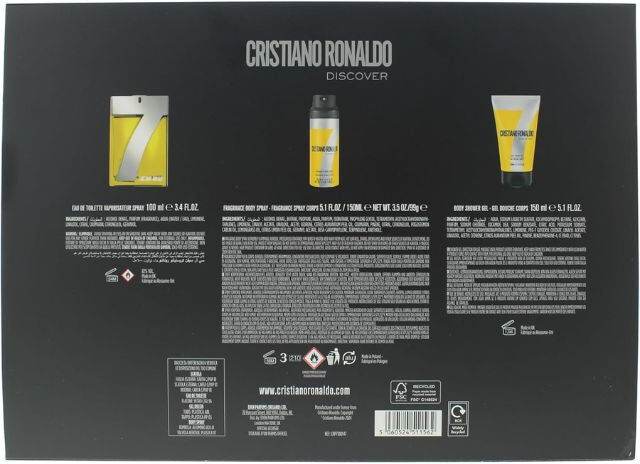
Cristiano Ronaldo CR7 Discover 100ml 3pc GiftsetDiscover the fresh and confident scent of Cristiano Ronaldo CR7 Discover, a modern men's fragrance inspired by ambition, success and the iconic style of Cristiano Ronaldo. This 3-piece gift set includes a 100ml Eau de Toilette along with complementary grooming essentials, making it the perfect choice for men who want to feel refreshed and confident throughout the day. CR7 Discover opens with a vibrant combination of fresh citrus and aromatic notes, creating an uplifting and energetic introduction. The heart reveals a sophisticated blend of floral and spicy accords, while the base adds warmth with smooth woods, amber and musk for a masculine and lasting finish. Giftset Includes: Cristiano Ronaldo CR7 Discover Eau de Toilette Spray 100ml Cristiano Ronaldo CR7 Discover Shower Gel Cristiano Ronaldo CR7 Discover Aftershave Balm27,95 £*Shipping: 3,99 £Secure redirect to the provider
-
Life Fitness Aspire Treadmill Discover SE4 16The Life Fitness Aspire Treadmill is where advanced engineering meets thoughtful design. Whether you're a seasoned runner or just starting out, it delivers a smooth and natural workout experience you can count on. You can pick the SL Console with its simple LED display or go for the Discover SE4,...16740,00 £*Shipping: 0,00 £Secure redirect to the provider
-
Name the isomeric compounds.
Isomers are compounds that have the same molecular formula but different structural arrangements. Some examples of isomeric compounds include butane and isobutane, which both have the molecular formula C4H10 but differ in their structural arrangement. Another example is glucose and fructose, which both have the molecular formula C6H12O6 but have different structural arrangements and properties. **
-
What are sodium compounds?
Sodium compounds are chemical compounds that contain sodium as one of their elements. These compounds can be found in various forms, such as sodium chloride (table salt), sodium hydroxide (lye), and sodium bicarbonate (baking soda). Sodium compounds are widely used in industry, agriculture, and everyday life due to their diverse properties and applications. **
-
What are atomic compounds?
Atomic compounds are chemical compounds that are composed of individual atoms of different elements bonded together. These compounds are held together by chemical bonds, such as ionic or covalent bonds, and do not contain any molecules. Examples of atomic compounds include sodium chloride (NaCl) and water (H2O). Unlike molecular compounds, which are made up of molecules, atomic compounds are made up of individual atoms. **
-
What are molecular compounds?
Molecular compounds are chemical compounds formed by the combination of two or more non-metal atoms. These atoms are held together by covalent bonds, which involve the sharing of electrons. Molecular compounds can exist as discrete molecules, such as water (H2O) and carbon dioxide (CO2), and they typically have lower melting and boiling points compared to ionic compounds. Examples of molecular compounds include methane (CH4), ammonia (NH3), and sulfur dioxide (SO2). **
* All prices are inclusive of VAT and, if applicable, plus shipping costs. The offer information is based on the details provided by the respective shop and is updated through automated processes. Real-time updates do not occur, so deviations can occur in individual cases. ** Note: Parts of this content were created by AI.